
- Official title
- Response—Marriage/Domestic Partnership (Family Law)
- Issued by
- Judicial Council of California
- Revision
- Rev. January 1, 2020
- Use
- Mandatory
- Official PDF
- FL-120 on www.courts.ca.gov
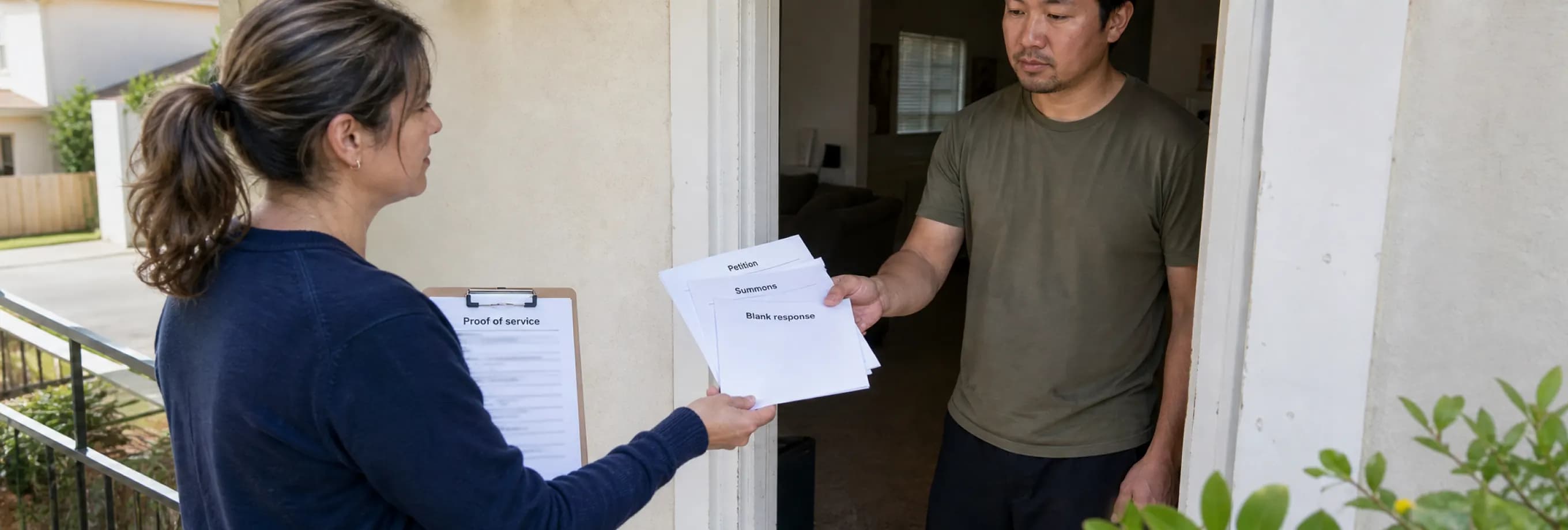
The petition and summons have just been served, and the petitioner's boxes now tell only one side of the case. FL-120 is where the respondent gives the court a position on those same issues. The Summons, FL-110, gives the respondent 30 calendar days after the Summons and Petition are served to file the response and have a copy served on the petitioner. A letter, phone call, or court appearance does not take the place of that response.
This page explains the statewide form and the instructions printed on it and the summons. It is general information, not legal advice about which positions, requests, or property descriptions fit a particular case.
How does FL-120 answer the petition?
FL-120 follows the petition's subjects in order. Items 1 through 4 cover the legal relationship, residence, statistical facts such as dates of marriage or registration and separation, and minor children. When the parties have minor children, the form says a completed FL-105, the Declaration Under Uniform Child Custody Jurisdiction and Enforcement Act, must be attached.
Item 5 gives the respondent space to contest the petitioner's legal grounds or request dissolution, legal separation, or nullity on grounds listed on the form. Item 6 covers legal custody, physical custody, and visitation. It names the same detailed parenting attachments found on FL-100: FL-311, FL-312, FL-341(C), FL-341(D), and FL-341(E).
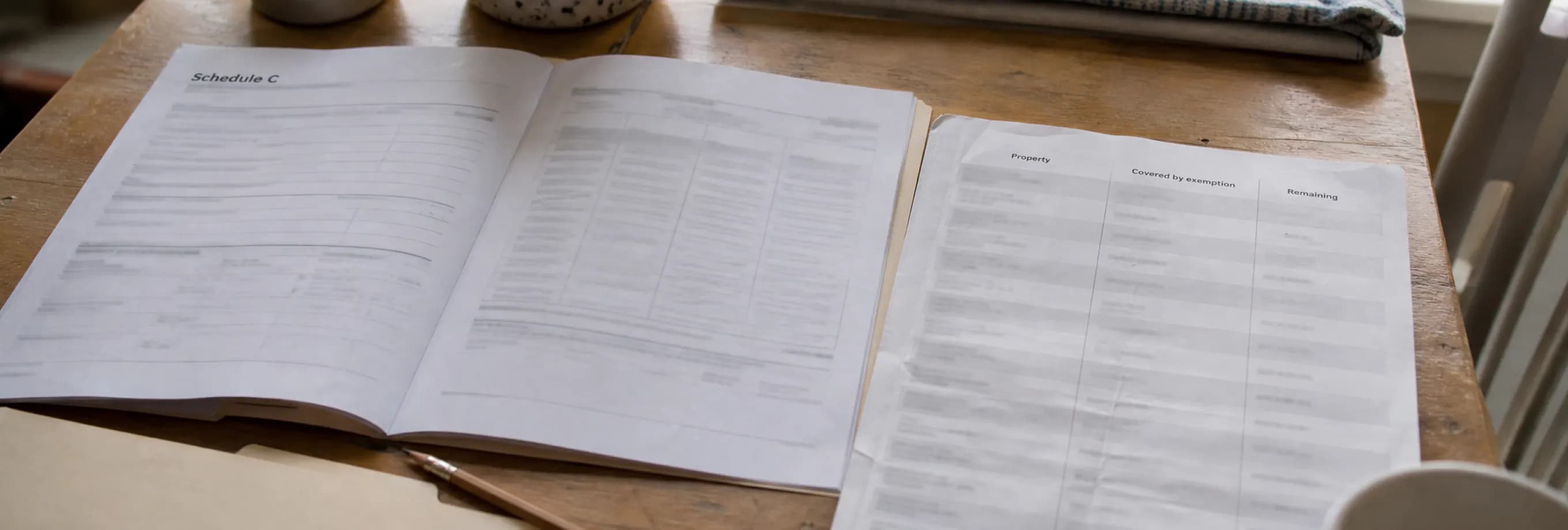
Items 7 and 8 address child support and spousal or domestic-partner support. Items 9 and 10 cover separate property and community and quasi-community property. Item 11 provides for attorney fees and costs, restoration of the respondent's former name, and other requests. Across these subjects, the response can match the petition where the parties agree or state the respondent's different facts and requested orders.
What has to happen after the response is completed?
The form's final instruction says the original response must be filed with the court together with proof that a copy was served on the petitioner. Neither FL-120 nor the supplied instruction states a particular service method. The California divorce process guide places the response within the larger filing and service sequence.
FL-120 is filed in the superior court handling the case. The statewide court directory leads to county courts and their current filing information. The current form is three pages and carries the footer “FL-120 [Rev. January 1, 2020].” California Courts also provides Arabic, Chinese Simplified, Korean, Spanish, and Vietnamese translations for reference; the English form is filed.
What does filing FL-120 cost?
Line 98 of the 2026 statewide civil fee schedule lists $435 for a response or other first paper filed in response to a petition for dissolution, legal separation, or nullity. The schedule's asterisk means some counties add a local surcharge. FW-001 is the form used to request a waiver when the fee is a barrier.
The fee is for the respondent's first filing. It does not change what FL-120 asks: the form still requires the respondent to address the relationship, children, support, property, and requested orders that apply to the response.
What does the summons say if no response is filed?
FL-110 says that if the response is not filed on time, the court may make orders affecting the marriage or domestic partnership, property, and custody of the children. It also says the respondent may be ordered to pay support and attorney fees and costs. That is the summons's stated default warning; it does not say that a late letter, phone call, or court appearance substitutes for filing FL-120.
For the served papers still on the table, a limited-scope review can be framed as one bounded task: checking the completed response and its attachments before filing. AttorneyIndex is a directory; browse family law attorneys in Los Angeles without the directory selecting or recommending one.
Common questions
- What is California form FL-120?
- FL-120 is the mandatory Judicial Council response used by a respondent in a case for dissolution, legal separation, or nullity of a marriage or domestic partnership.
- How long does a respondent have to file FL-120?
- FL-110, the Summons, gives the respondent 30 calendar days after the Summons and Petition are served to file FL-120 and have a copy served on the petitioner.
- How much does it cost to file FL-120?
- Line 98 of the 2026 statewide fee schedule lists $435 for a response or other first paper filed after the first paper. Some counties add a local surcharge. Form FW-001 requests a fee waiver.
- Is FL-105 required with FL-120?
- When the petitioner and respondent have minor children, FL-120 says a completed FL-105 UCCJEA declaration must be attached.
- Is FL-120 available in other languages?
- California Courts provides Arabic, Chinese Simplified, Korean, Spanish, and Vietnamese translations for reference. The English FL-120 is filed with the court.
Sources
Checked on September 22, 2026. Where this page and a court’s own published material disagree, the court is authoritative.
- Judicial Council of California — Form FL-120 (opens in a new tab)
- California Courts Self-Help — Form FL-120 information (opens in a new tab)
- Judicial Council of California — Form FL-110 Summons (opens in a new tab)
- Family Code section 2020 — standard court forms (opens in a new tab)
- California Courts — 2026 Statewide Civil Fee Schedule (opens in a new tab)