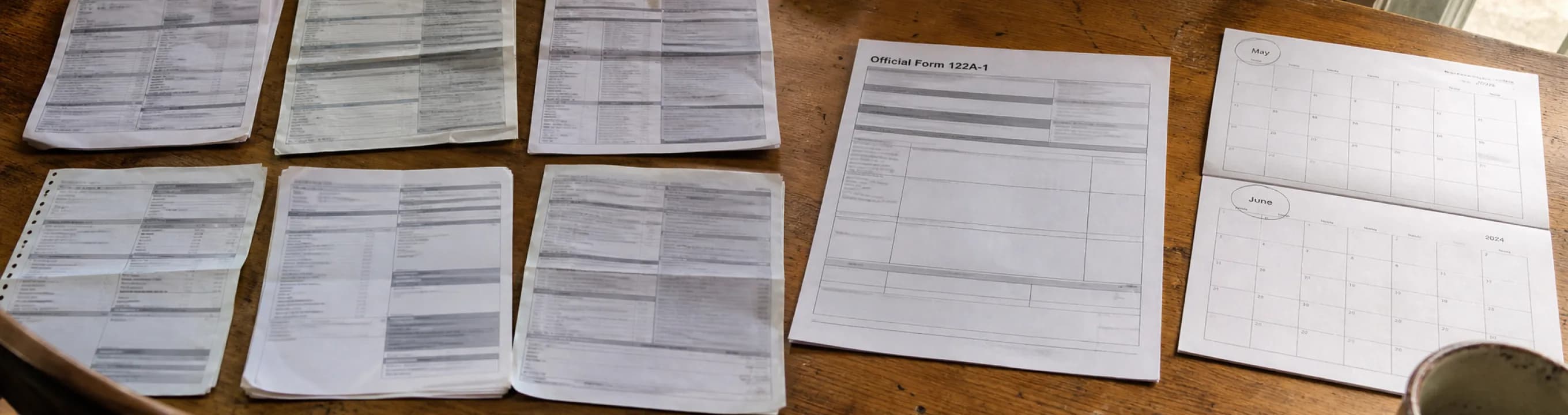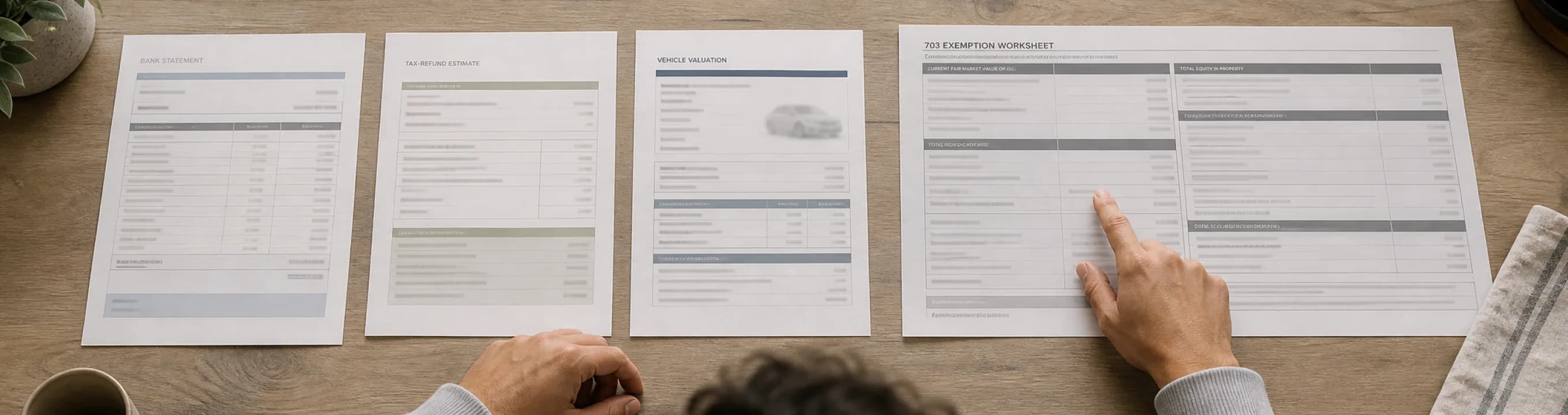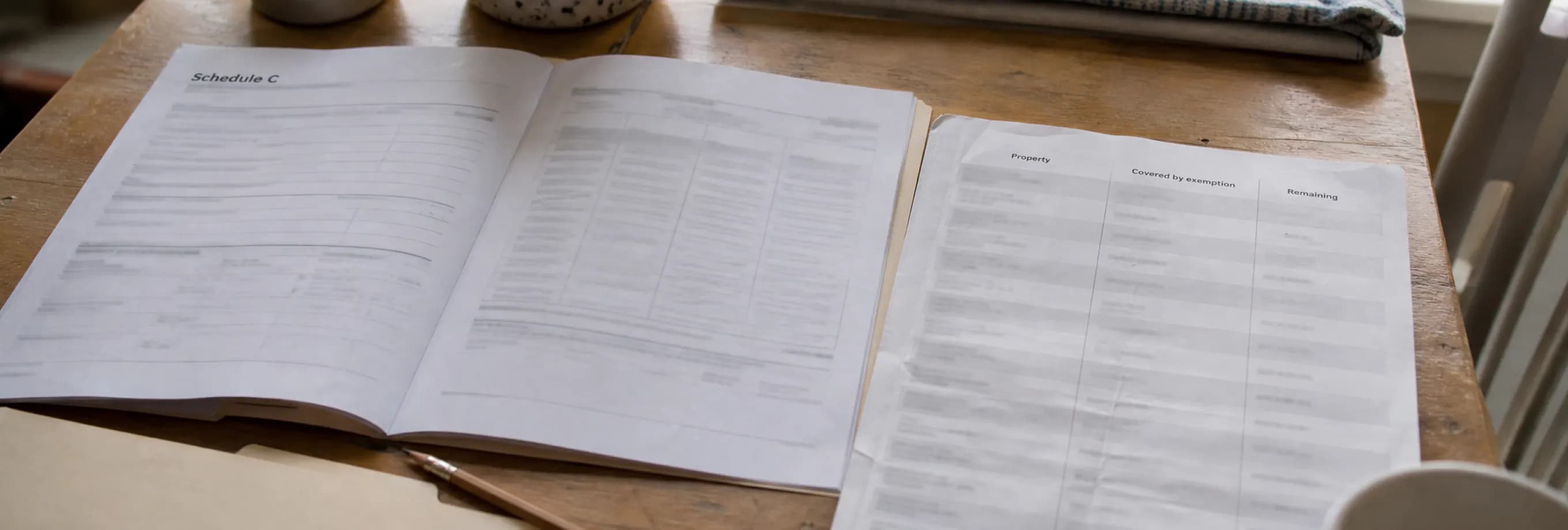


A borrower receives a servicer notice saying that SAVE has ended and a new repayment plan must be chosen within the deadline in the notice. The bankruptcy worksheet on the kitchen table still uses the old SAVE amount. Before anyone can discuss a bankruptcy path, those two records have to describe the same debt on the same date.
The early answer is twofold. Covered student loans can be discharged when a bankruptcy court finds undue hardship, usually through an adversary proceeding. Separately, a new repayment-plan amount may change the household's real cash flow, but it is not automatically a dollar-for-dollar deduction on the bankruptcy means test.
The repayment information below was checked on August 15, 2026 against the Department of Education's March 27 SAVE announcement, Federal Student Aid's current guidance, and final regulations effective July 1, 2026. Because this part of the article can change faster than the Bankruptcy Code, it should be reviewed again by November 15, 2026.
This article provides general information. It does not determine whether a loan is dischargeable, whether someone should file bankruptcy, or how a court would decide an individual case.
Can student loans be discharged in bankruptcy?
Section 727 supplies the general Chapter 7 discharge, while section 523 lists debts that the general discharge does not reach. Under section 523(a)(8), the covered categories of education debt remain excepted unless requiring repayment would impose undue hardship on the debtor and the debtor's dependents. That wording is an exception with a legal test, not a rule that student debt can never be discharged.
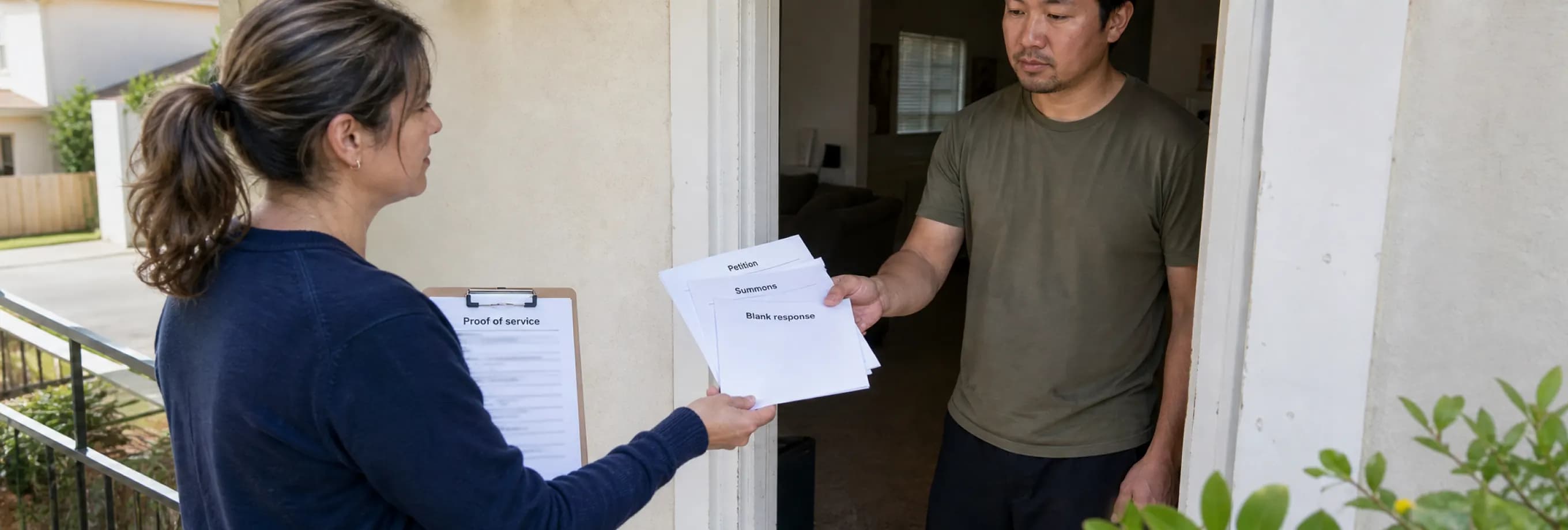
The debtor normally asks for the undue-hardship determination by filing an adversary proceeding, a lawsuit within the bankruptcy case, and the practical time to do it is while the case is open. A case that closes without one can be reopened, but reopening is a motion with its own fee. Merely listing a loan on the schedules does not obtain that ruling. The complaint also has to identify the creditor and the kind of debt involved; section 523(a)(8) describes specific categories rather than declaring every debt connected to education nondischargeable. Those categories are loans made, insured or guaranteed by a governmental unit or made under a funded program; an obligation to repay funds received as an educational benefit, scholarship or stipend; and a qualified education loan as the tax code defines it. Which subparagraph a private loan falls under, if any, is the first question in the case rather than a formality.
The federal standardized process discussed in this article has a narrower boundary. It applies when the Department of Education holds the loans and the United States is the defendant. A private loan does not enter the DOJ-Education attestation pathway, and its treatment still requires analysis of the statutory categories and the particular obligation.
What is the attestation process?
DOJ and Education began using standardized guidance in November 2022. The U.S. Trustee Program page, updated March 17, 2026, links the current May 2025 attestation. In a covered adversary proceeding, the form gives the government a common record for evaluating whether to stipulate to facts and recommend full or partial discharge.
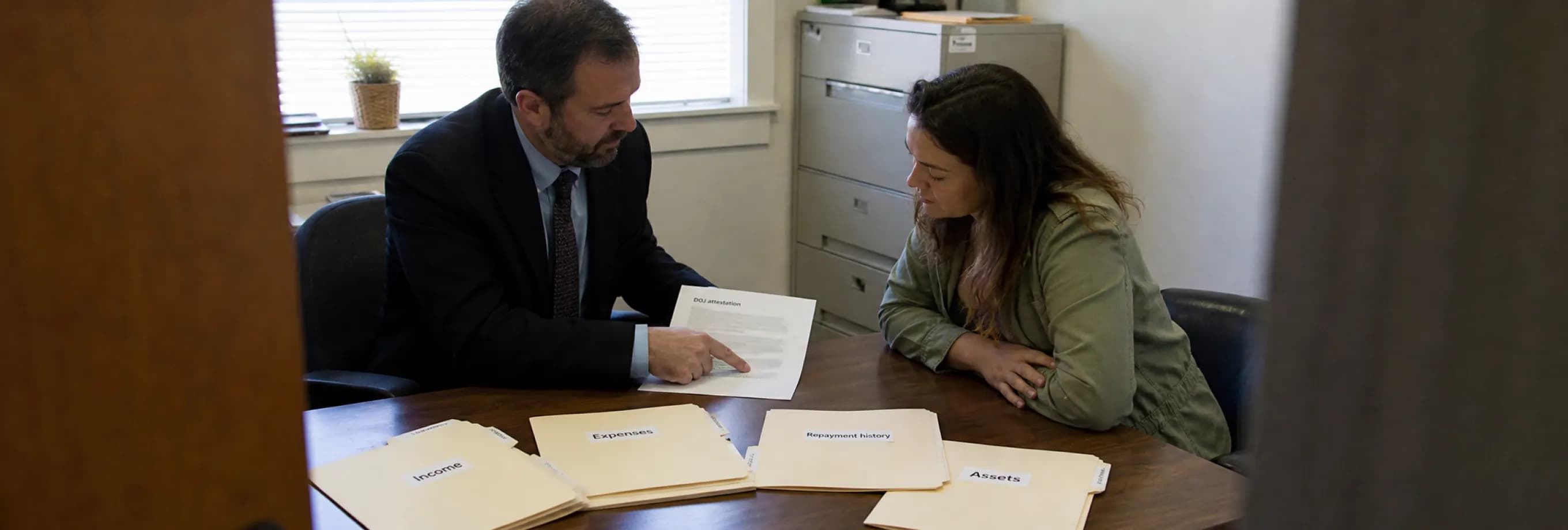
The attestation is sworn under penalty of perjury. It asks for:
- the loan balance, current monthly payment, repayment status, and educational history;
- current household income and necessary expenses;
- facts bearing on whether the financial condition is likely to persist;
- prior payments, contacts with the servicer, and efforts to use repayment options; and
- real estate, vehicles, retirement accounts, business interests, and an expected tax refund.
It is not a replacement for the lawsuit, and it is not a government-issued discharge. DOJ's guidance is an internal policy; it does not create a substantive right enforceable against the government. Where the record supports the legal elements, the government may stipulate to facts and recommend a result — and the bankruptcy judge is not bound by that recommendation. The determination is the court's.
The form itself also gives a useful filing warning: the completed attestation should go to the Assistant United States Attorney handling the case and should not be filed on the public court docket unless the court or an attorney directs otherwise. That matters because the form contains medical, financial, household, and asset information.
What is undue hardship?
The Bankruptcy Code uses the phrase but does not define it. In the Ninth Circuit, which includes California, courts apply the Brunner framework. The debtor must prove three connected points: current income and expenses do not permit both repayment and a minimal standard of living; additional circumstances show that condition is likely to persist for a significant part of the repayment period; and the debtor made good-faith efforts to repay.
DOJ organized its guidance around those same subjects. For present ability, it compares household income with supported necessary expenses. For future ability, it looks for evidence such as age, long repayment history, incomplete education, disability or chronic injury, extended unemployment, and other circumstances affecting earnings. For good faith, it reviews payments and attempts to manage the debt, including contacts about consolidation, deferment, forbearance, or income-driven repayment.
That is the structure of the government's evaluation, not a promise about the court's finding. The attestation asks a borrower who did not enroll in an income-driven plan to explain why. It does not state that enrollment is a statutory prerequisite to discharge. The current required payment is evidence within the record; the name of the repayment plan is not the undue-hardship test.
“…unless excepting such debt from discharge under this paragraph would impose an undue hardship on the debtor and the debtor’s dependents…”
— 11 U.S.C. section 523(a)(8)
Does bankruptcy stop wage garnishment for student loans?
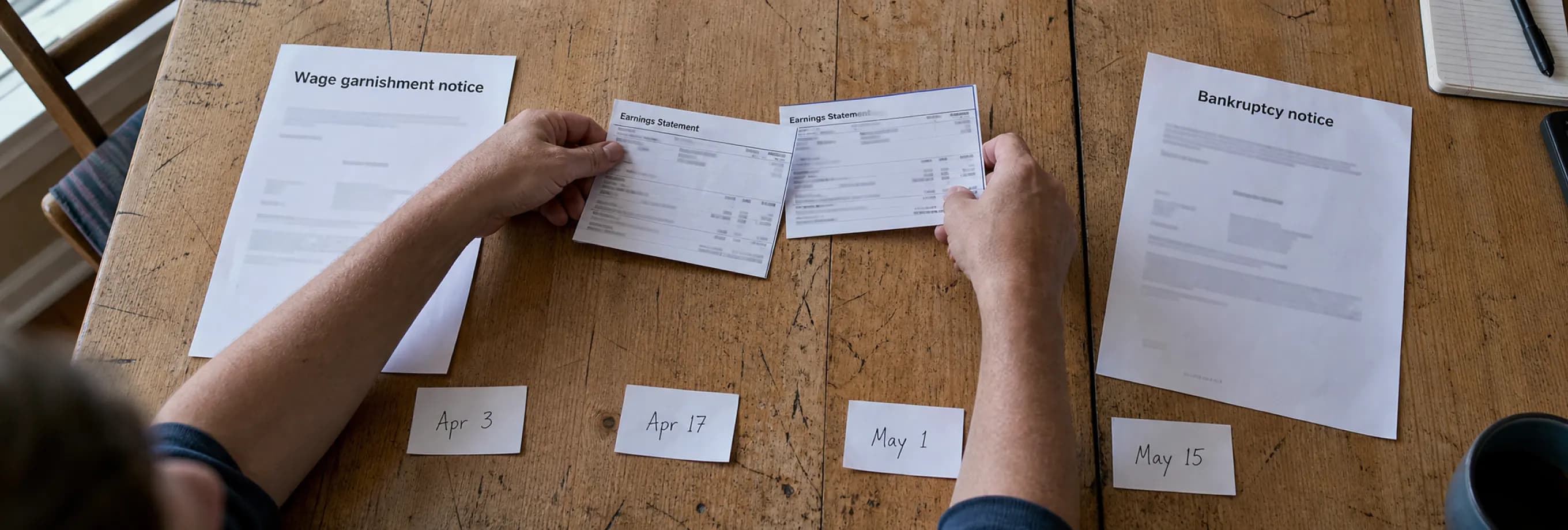
Section 362 says that filing a bankruptcy petition operates as a stay of many actions and acts to collect a claim that arose before filing. An administrative wage garnishment for a prepetition student loan generally pauses while that stay applies. What the stay does not reach is an obligation that arose after the petition: a loan taken out later is a post-petition debt, and collection on it is not paused by the earlier filing. To document the pause accurately, put the petition date, creditor notice, pay periods, and actual deductions in one timeline.
The stay and discharge do different jobs. The stay is temporary and can end or be modified under the Bankruptcy Code. A general Chapter 7 discharge under section 727 does not erase a debt that remains excepted under section 523(a)(8). If the student loan survives and no other order controls collection, the end of the stay can reopen collection options, including wage garnishment when otherwise authorized.
That distinction also explains why a short collection pause, standing alone, says nothing about whether filing is appropriate. The useful records are the garnishment order, recent pay stubs, the bankruptcy notice, and any communication showing when withholding changed.
How do student loan payments affect the means test?
This is where the end of SAVE and the arrival of RAP matter, but only after the loan record is made current. As of August 15, 2026, the Department of Education's March 27, 2026 announcement states that earlier that month a court ended SAVE by approving a settlement between the Department and the State of Missouri, and that affected borrowers receive a servicer notice giving at least 90 days to select another plan. The notice supplies the borrower's actual deadline; the announcement, written in March, says servicers would begin issuing them on July 1, 2026.
Doing nothing has a defined result, which matters here because it determines what the file should say. The announcement states that a borrower who does not transition within the 90-day period communicated by the servicer is automatically enrolled in either the Standard Repayment Plan or the new Tiered Standard Plan. That is an assignment by default, not an income-driven amount, so a worksheet still carrying a SAVE figure may be wrong in both directions at once.
Final Department of Education regulations published at 91 FR 23768 took effect July 1, 2026. They made the Repayment Assistance Plan, or RAP, available and created a new Tiered Standard plan. For a borrower who received a Direct Loan on or after July 1, 2026, the regulations limit repayment-plan selection for the Direct Loans to Tiered Standard or RAP, subject to loan eligibility. RAP is the only income-driven option in that setting. Parent PLUS loans and certain consolidation loans have separate restrictions: the rule excludes an excepted PLUS loan or excepted consolidation loan from RAP, which leaves a Parent PLUS borrower with the Tiered Standard plan rather than an income-driven one. That is why the phrase “new federal loan” is not enough to identify an available plan, and why a Parent PLUS borrower's monthly figure is often the one that moves least under the new rules.
For eligible older loans, the transition is different. The final rule requires borrowers in PAYE or ICR, or the associated administrative forbearance, to elect another available plan before July 1, 2028. If no election is made, the rule directs the Secretary to place eligible loans into RAP and RAP-ineligible loans into IBR on July 1, 2028. These are mandatory transition provisions, not a prediction that every older borrower has the same choices today.
Once the servicer produces a current amount, bankruptcy law asks a separate question: where, if anywhere, does that amount enter the calculation?
Official Form 122A-2 for Chapter 7 does not list a scheduled student-loan payment as its own ordinary deduction. Section 707(b)(2)(B) permits an adjustment for special circumstances only when there is no reasonable alternative, and it requires itemization, documentation, a detailed explanation, and an oath. The existence of a nondischargeable student loan does not by itself complete those steps. The linked California Chapter 7 means-test guide explains the rest of Form 122A-2.
Chapter 13 is not a simple subtraction either. Section 1325 requires projected disposable income in the circumstances specified there, and above-median debtors use deductions determined under section 707(b)(2). Official Form 122C-2 includes a place for properly supported special-circumstances claims; it does not create a blanket student-loan-payment deduction. A changed federal payment can still alter actual cash flow, the schedules, plan feasibility, and the evidence supporting any claimed expense. It just does not carry itself into the statutory result.
The clean work product is a one-page reconciliation with the loan owner, loan type, disbursement dates, current plan, required payment, next due date, and the source and date for each entry. Keep the means-test treatment in a separate column. The California exemption comparison belongs in the asset review, not in the student-loan-payment calculation.
A limited-scope consultation can be framed around that reconciliation: identify which loans enter the DOJ process, check the current repayment record, and mark where each number appears on the bankruptcy forms. Ask whether the attorney handles student-loan adversary proceedings and whether a defined review is available before discussing a separate litigation engagement. AttorneyIndex is a directory, not a matching or referral service. Readers choose whom to contact from the California bankruptcy listings; the directory does not select or recommend an attorney.
For the borrower holding the SAVE transition notice, the next useful step is modest: replace the old payment in the file with a dated, sourced number, then keep the repayment-plan question separate from the undue-hardship question.
An undue-hardship case is litigation, not paperwork. Of the 1,523 bankruptcy attorneys listed in this directory, 66 are certified by the State Bar's Board of Legal Specialization in Bankruptcy Law.
Common questions
- Can student loans be discharged in bankruptcy?
- Covered education debt is excepted from an ordinary discharge unless the bankruptcy court finds that repayment would impose undue hardship. A debtor normally requests that ruling in an adversary proceeding within the bankruptcy case.
- What is the attestation process?
- In an adversary proceeding involving Department of Education-held loans, DOJ generally asks the debtor for a sworn attestation addressing present ability to pay, likely future circumstances, prior repayment efforts, and assets. The government may stipulate to facts and recommend discharge, but the court decides.
- What is undue hardship in the Ninth Circuit?
- Ninth Circuit courts use the Brunner framework: inability to maintain a minimal standard of living while repaying, additional circumstances indicating that condition is likely to persist, and good-faith efforts to repay. The result depends on the evidence presented to the court.
- Does bankruptcy stop wage garnishment for student loans?
- A bankruptcy petition generally stays collection of a prepetition debt, including an administrative wage garnishment, while the stay applies. That pause does not itself discharge the loan, and collection may resume after the stay ends if the debt remains enforceable.
- How do student loan payments affect the means test?
- Official Forms 122A-2 and 122C-2 do not provide an automatic, stand-alone deduction for the scheduled student loan payment. A claimed additional expense must fit the governing statute and form, and special circumstances require documentation, a detailed explanation, and an oath. The current payment still matters to the household budget and may matter elsewhere in the bankruptcy analysis.
Sources
Checked on August 16, 2026. Where this page and a court’s own published material disagree, the court is authoritative.
- 11 U.S.C. section 523 — exceptions to discharge and undue hardship (opens in a new tab)
- 11 U.S.C. section 727 — Chapter 7 discharge (opens in a new tab)
- 11 U.S.C. section 362 — automatic stay (opens in a new tab)
- 11 U.S.C. section 707 — Chapter 7 means test and special circumstances (opens in a new tab)
- 11 U.S.C. section 1325 — Chapter 13 projected disposable income (opens in a new tab)
- U.S. Trustee Program — Student Loan Guidance, updated March 17, 2026 (opens in a new tab)
- DOJ — May 2025 student loan attestation form (opens in a new tab)
- Northern District of California — Department of Education loan adversary guidelines (opens in a new tab)
- Department of Education — SAVE transition announcement, March 27, 2026 (opens in a new tab)
- Federal Register — 2026 final repayment-plan regulations, effective July 1, 2026 (opens in a new tab)
- Federal Student Aid — current income-driven repayment plan FAQ (opens in a new tab)
- Federal Student Aid — One Big Beautiful Bill Act updates and borrower scenarios (opens in a new tab)
- Federal Student Aid — income-driven repayment plans (opens in a new tab)
- U.S. Courts — Official Form 122A-2, Chapter 7 Means Test Calculation (opens in a new tab)
- U.S. Courts — Official Form 122C-2, Chapter 13 Calculation of Disposable Income (opens in a new tab)