

The useful family plan is not the thick folder in a parent's desk. It is the current form in the caregiver's hand, the school office that already knows the caregiver's name, and a pediatrician who can find the child's insurance information when the parent cannot answer.
AB 495, effective January 1, 2026, gives California families more ways to build that handoff. The law is often discussed only in the context of immigration enforcement, but the documents also help when a parent is hospitalized, deployed, detained, or otherwise unavailable.
This guide describes statewide law and current California Courts materials. It is not advice about custody, immigration status, or a particular emergency.
Start with the smallest document that does the job
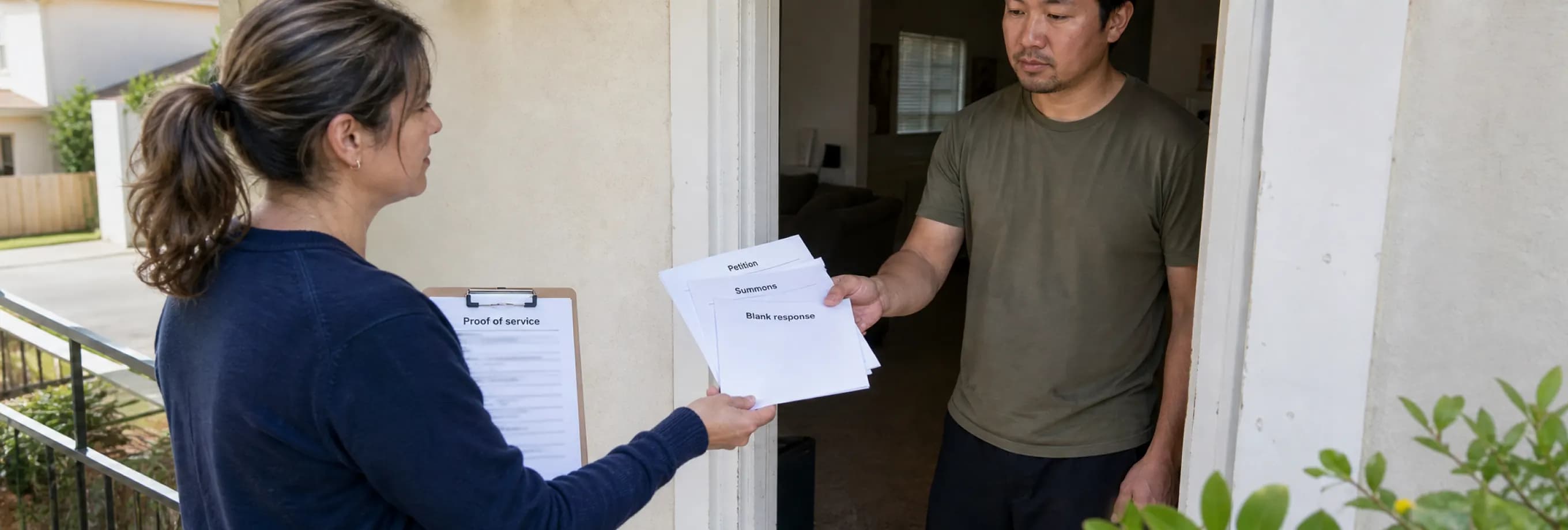
The updated Caregiver's Authorization Affidavit is intentionally simple. It is not filed with a court and does not need notarization or a parent's signature. The adult caregiver signs under penalty of perjury and gives copies to the school, medical office, or county welfare office that needs it.
Authority depends on who the caregiver is and which items are completed:
| What the caregiver needs to do | Who may use the affidavit | Items completed |
|---|---|---|
| Enroll the child in school and consent to school-related medical care | Any caregiver age 18 or older with whom the child lives | 1–4 |
| Consent to medical and dental care outside the school-related context | A qualifying relative with whom the child lives | 1–8 |
AB 495's definition of relative reaches blood, adoption, or affinity within the fifth degree, including stepparents, stepsiblings, many extended relatives, and their spouses. The updated form also accepts a government-issued consular card in its identification field.
What the relative caregiver gets is the authority a guardian has under Probate Code section 2353, and the statute says it may extend to mental health treatment — subject to the limits in Probate Code section 2356, which are their own subject.
A current correction worth keeping: the affidavit does not expire after one year. Neither Family Code section 6550 nor the form in section 6552, both as amended by AB 495, sets any time limit. The one invalidity rule they state is the same in each: once the child stops living with the caregiver, the caregiver must tell every school, provider and health plan holding the affidavit, and it is invalid from the moment that notice arrives.
Expect to be told otherwise. The annual-renewal rule is genuine older law, and it still appears on un-updated court pages and county bulletins. If a school or clinic refuses a current affidavit for being over a year old, the answer is the statutory text, not the handout.
What the affidavit does not transfer
The affidavit is not custody. It does not terminate a parent's rights, make the caregiver a legal guardian, or prevent the parent from making a contrary decision. Family Code section 6550 says a parent's or legal custodian's decision supersedes the caregiver's unless it jeopardizes the child's life, health, or safety.
That limited scope is often a feature. A grandmother may need to enroll a child and approve dental care during a parent's absence without asking a probate judge for control over the child's life.

It is less suitable when authority will be disputed, the child will not live with the caregiver, or the caregiver must make broader decisions for a long period. Where the dispute is between the parents themselves, custody is decided in the family case rather than by affidavit — and a domestic-violence finding changes who has to prove what, which section 3044 sets out.
When joint guardianship is the better structure
AB 495 also created a path for joint guardianship. A custodial parent can ask the probate division of the superior court to appoint a person they nominate to serve as guardian alongside them, where the parent expects to be temporarily unavailable for one of the reasons the statute names — an immigration-related administrative action among them. The arrangement is more formal than an affidavit, and what it covers and when it starts are set by the court's order.
That difference matters:
- an affidavit is signed by the caregiver and used directly with institutions;
- guardianship requires a court case, notice, and a judge's order;
- a guardian receives legal authority and corresponding duties; and
- the order can address circumstances that a school-facing affidavit cannot solve.
Families should not treat guardianship as a stronger affidavit. It changes legal status. Before filing, identify the exact decisions the caregiver must make and whether a parent expects to remain available.
Privacy protections are part of the plan
AB 495 also reaches how immigration-related information is handled, though the two halves of that have different histories. Its new restriction covers licensed child daycare facilities and license-exempt state preschools: they may not collect information about citizenship or immigration status unless the law requires it, and may not disclose covered information to immigration authorities except as the law permits or requires and by the procedure it specifies. The parallel limit on schools was already in California law before this bill — worth knowing if you are told the school rule is new.
Those protections do not replace a handoff. A school cannot call a caregiver whose number it never received. A clinic cannot infer allergies from a guardianship order. The legal form works only when ordinary records travel with it.

Build the packet someone can use at 7:15 a.m.
Keep the final page practical. A caregiver packet should contain:
- the current signed affidavit, or a copy of the guardianship order — certified if the institution asks for that;
- the child's legal name, date of birth, school, and physician;
- insurance details, medications, allergies, and pharmacy;
- two backup contacts and the other parent's current information, when safe;
- a copy of any custody order that limits pickup or contact; and
- one short note stating when to call the parent, the backup adult, or emergency services.
Review the packet after a move, school change, custody order, medication change, or change in who the child lives with. Give copies to the institutions that will rely on them; do not make the only copy the one locked inside the parent's home.
If the choice between affidavit and guardianship is unclear, a fixed-scope preparedness review buys one meeting and one written list: authority needed, correct forms, recipients, and missing records. Immigration advice, contested custody, and a probate guardianship may require different lawyers; AttorneyIndex separates practice areas and links listings to State Bar information where available.
The finished packet has one test: could the named caregiver use it tomorrow morning without first finding the parent?
The form is the simple part. Disputes about authority, custody or safety are not. This directory lists 3,726 California family-law attorneys, 635 of them State Bar certified specialists in Family Law.
Common questions
- What did California AB 495 change?
- Effective January 1, 2026, it updated the caregiver affidavit, broadened acceptable identification and the definition of relative, created a joint guardianship option, and added privacy protections in schools and licensed child-care settings.
- Does a caregiver affidavit need a court or notary?
- No. The California Courts form says it does not need a parent signature, notarization, or court filing. The caregiver signs it under penalty of perjury.
- Does the caregiver affidavit expire after one year?
- No. Family Code sections 6550 and 6552, as amended by AB 495, set no time limit. The affidavit becomes invalid once the school, provider, or health plan receives notice that the child no longer lives with the caregiver. Older court pages and county bulletins still print an annual-renewal rule; the statutory text is what governs.
- Can any caregiver consent to all medical care?
- No. Any adult caregiver can complete items 1 through 4 for school enrollment and school-related medical care. A qualifying relative completes items 5 through 8 for broader medical and dental authority.
- Is an affidavit the same as guardianship?
- No. The affidavit is a practical authorization and does not transfer legal custody. Guardianship is a court status with broader authority and duties.
Sources
Checked on August 16, 2026. Where this page and a court’s own published material disagree, the court is authoritative.